The Power of a Human Resources Cover Letter
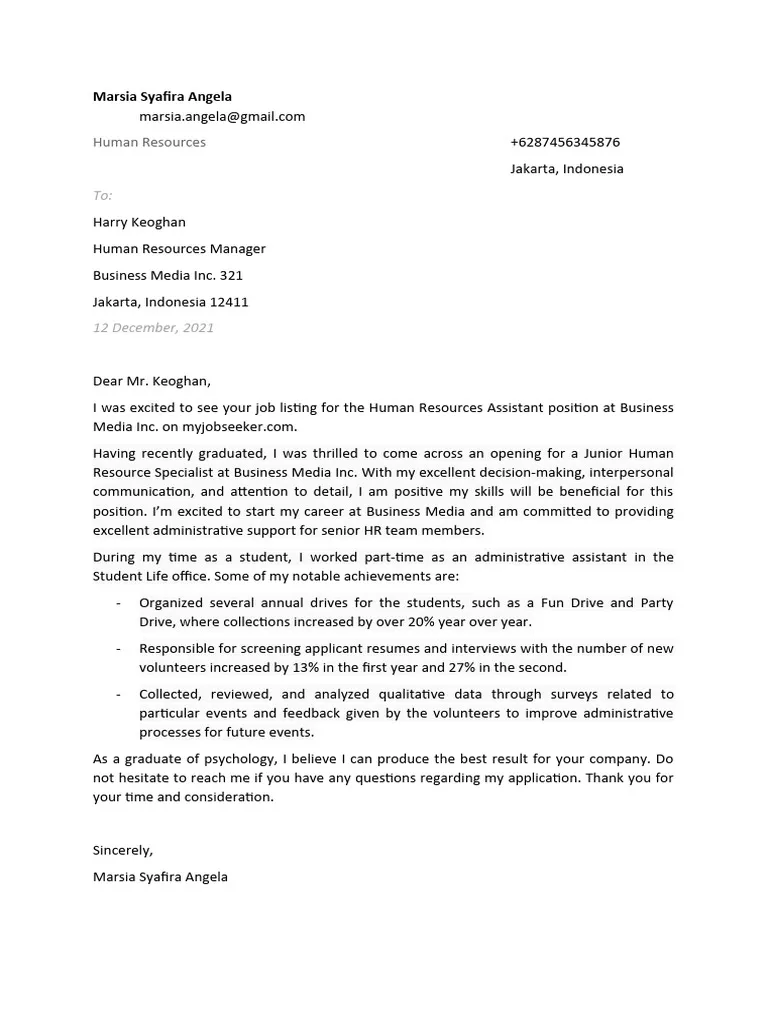
In the competitive landscape of job applications, a well-crafted human resources cover letter is your key to unlocking the door to your dream role. It serves as your initial introduction to a potential employer, offering an opportunity to showcase your personality, skills, and enthusiasm for the position. Unlike a resume, which provides a snapshot of your experience, a cover letter allows you to tell a story, connecting your qualifications directly to the specific requirements of the job. By strategically highlighting your relevant skills and experiences, you can captivate the hiring manager and distinguish yourself from other candidates. A strong cover letter demonstrates your understanding of the company’s needs and your commitment to contributing to their success. Remember, it’s not just about listing your past roles; it’s about articulating why you are the perfect fit for the job and how you can make a valuable impact within the organization. Therefore, invest time in crafting a compelling human resources cover letter, as it significantly increases your chances of securing an interview and ultimately landing the job.
Secret 1 Tailoring to the Job
One of the most impactful secrets to a successful human resources cover letter is tailoring it specifically to the job you are applying for. Generic cover letters often fail to capture the attention of hiring managers, as they lack the personalized touch that demonstrates genuine interest and understanding of the role. Tailoring your cover letter involves meticulous research and a keen eye for detail, ensuring that your qualifications align seamlessly with the job description and the company’s values. By demonstrating that you have taken the time to understand the specific requirements of the position, you immediately position yourself as a serious candidate who is genuinely interested in contributing to the organization’s goals. This level of personalization showcases your initiative and your commitment to excelling in the role, significantly boosting your chances of moving forward in the hiring process. Remember, each cover letter should be a unique reflection of the job you are applying for.
Researching the Company

Before you begin writing your human resources cover letter, thorough research of the company is crucial. Invest time in exploring their website, social media profiles, and any recent press releases or news articles. Understanding the company’s mission, values, and recent initiatives will allow you to tailor your cover letter more effectively. Look for opportunities to connect your skills and experience to their specific needs and demonstrate how you can contribute to their success. This research shows your genuine interest in the company and your ability to align your career goals with their objectives. When you can reference specific projects, values, or goals of the organization, you demonstrate a level of engagement that sets you apart from generic applicants. Knowing the company culture and language will help you frame your cover letter in a way that resonates with the hiring manager and demonstrates that you are a good fit for their team.
Highlighting Relevant Skills
Once you have researched the company and the job requirements, strategically highlight the skills and experiences that align with the position. Identify the key skills and qualifications mentioned in the job description and provide clear examples of how you have successfully utilized these skills in the past. This approach allows you to showcase your capabilities in a way that is directly relevant to the role. Don’t simply list your skills; instead, explain how you have applied them to achieve tangible results. By providing specific examples, you provide the hiring manager with concrete evidence of your abilities and demonstrate your potential to excel in the position. Use action verbs to showcase your accomplishments and quantify your achievements whenever possible. By tailoring your cover letter to the specific needs of the employer, you are providing evidence of your suitability to the position and increasing your chances of being called in for an interview.
Secret 2 Quantify Your Accomplishments
A critical secret to crafting a compelling human resources cover letter is to quantify your accomplishments. Instead of merely stating your responsibilities, use numbers, percentages, and specific metrics to demonstrate the impact of your work. Quantifiable achievements add credibility to your claims and provide tangible evidence of your skills and contributions. For example, instead of saying “Improved employee satisfaction,” you could state, “Increased employee satisfaction scores by 15% through the implementation of new HR initiatives.” This level of detail demonstrates your ability to drive results and make a positive impact within an organization. By providing specific data points, you transform your cover letter into a powerful tool that captures the attention of hiring managers and showcases your ability to achieve measurable success in your past roles. Quantifying your accomplishments is a key factor in making your cover letter stand out.
Using Numbers and Data
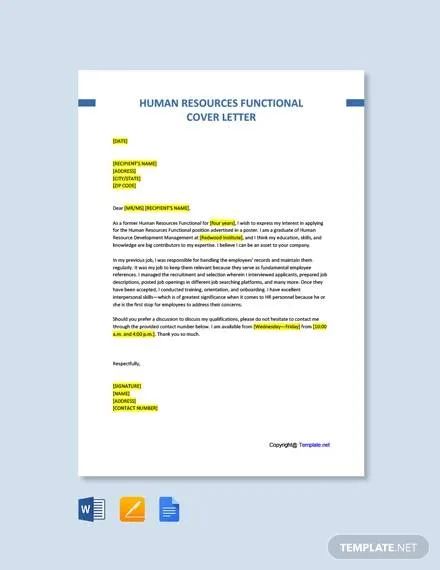
Incorporating numbers and data is essential for quantifying your accomplishments. Whenever possible, use specific figures to illustrate the impact of your work. For example, when describing your experience with recruitment, you could state “Reduced time-to-hire by 20%” or “Successfully recruited 50+ employees within one quarter.” Numbers provide concrete evidence of your effectiveness and make your claims more compelling. Similarly, if you have experience with training and development, you could highlight the positive outcomes with data, such as “Improved employee performance scores by 10% after implementing a new training program.” Using data demonstrates your ability to analyze outcomes, track progress, and make data-driven decisions. This level of detail showcases your attention to detail and your ability to measure the success of your efforts, which is highly valued in the field of human resources. Presenting this data effectively can significantly elevate the quality of your cover letter.
Demonstrating Impact
Beyond simply using numbers, it’s crucial to demonstrate the impact of your accomplishments on the organization. Describe the specific results of your efforts and how they contributed to the company’s goals. For example, if you reduced employee turnover rates, explain how this led to cost savings, increased productivity, or improved team morale. If you implemented a new HR system, highlight the benefits it provided, such as improved efficiency or enhanced data accuracy. By illustrating the positive outcomes of your work, you demonstrate your ability to make a meaningful contribution to the success of the organization. Connect your accomplishments to the company’s mission and values, showing how your actions align with their goals. This approach positions you as a strategic thinker who understands the bigger picture and is capable of driving positive change. Showing the hiring manager the difference you made in previous roles will set you apart from other candidates.
Secret 3 Show, Don’t Tell
In the realm of human resources cover letters, “show, don’t tell” is a mantra for success. Avoid simply listing your skills or qualities; instead, provide concrete examples that illustrate your abilities. This approach makes your cover letter more engaging and persuasive, allowing the hiring manager to see your capabilities in action. By offering real-world examples, you demonstrate your capacity to apply your skills in practical situations, showcasing your adaptability and problem-solving skills. For instance, instead of stating that you are a good communicator, describe a situation where you successfully mediated a conflict between team members or presented a complex HR policy to a large group. This detailed approach makes your cover letter more memorable and leaves a lasting impression on the hiring manager. Always back up your claims with evidence and allow your achievements to speak for themselves. Demonstrating your achievements through examples is more effective than simply stating that you have them.
Providing Examples

Providing concrete examples is the cornerstone of a strong human resources cover letter. Instead of stating, “I am a good team player,” provide a specific example of how you collaborated with others to achieve a common goal. Describe the situation, the actions you took, and the positive outcomes that resulted. If you have experience with performance management, share a story of how you identified an employee’s strengths and weaknesses, developed a plan to improve their performance, and achieved a successful outcome. Use the STAR method (Situation, Task, Action, Result) to structure your examples, providing a clear and concise narrative that demonstrates your abilities. This approach makes your cover letter more engaging and allows the hiring manager to see your skills in action. Examples add depth to your narrative and create a clear picture of your skills and abilities. They bring your experience to life.
Using Action Verbs
To make your cover letter even more dynamic and compelling, use strong action verbs. Action verbs help you showcase your accomplishments and bring your experiences to life. Use verbs like “managed,” “implemented,” “developed,” “led,” “coordinated,” and “achieved” to describe your responsibilities and achievements. Start each bullet point or sentence with a powerful action verb to emphasize your impact. For example, instead of writing “Responsible for recruitment,” write “Managed the full-cycle recruitment process, resulting in a 20% reduction in time-to-hire.” These verbs inject energy and focus into your writing, making your cover letter more engaging and memorable. Using action verbs will help you present your experience in a way that is clear, concise, and impactful. Selecting the right action verbs helps you tell the most compelling story about your experience.
Secret 4 Perfect Formatting
The formatting of your human resources cover letter is critical to making a positive first impression. A well-formatted cover letter demonstrates professionalism and attention to detail, whereas a poorly formatted one can immediately disqualify you from consideration. Ensure your cover letter is easy to read and visually appealing by using a clear font, appropriate font size, and ample white space. Use consistent formatting throughout your letter, including proper margins and paragraph spacing. Proofread your cover letter multiple times to eliminate any typos or grammatical errors. A clean and well-structured cover letter shows that you care about the details and are committed to presenting your best self. By following these formatting guidelines, you can make your cover letter more readable and engaging for the hiring manager, increasing your chances of getting noticed.
Choosing the Right Font

Selecting the right font is a fundamental aspect of cover letter formatting. Choose a professional and readable font that is easy on the eyes. Avoid using overly stylized or decorative fonts, as they can be difficult to read and detract from your message. Recommended fonts include Arial, Calibri, Times New Roman, and Helvetica. Make sure that the font size is between 10 and 12 points for optimal readability. The font should be consistent throughout your entire cover letter, including your name, contact information, and the body text. A clean and professional font choice enhances the overall appearance of your cover letter and makes it more appealing to read. Remember, the goal is to create a clear and visually appealing document.
Ensuring Readability
Readability is paramount when it comes to cover letter formatting. Ensure that your cover letter is easy to read by using ample white space, appropriate paragraph spacing, and clear headings. White space is the empty area on your page, which helps to separate different sections and make your content less cluttered. Use single or 1.15 line spacing for paragraphs and double-space between paragraphs to provide visual breaks. Keep paragraphs concise and focused, typically no more than five to six sentences in length. Use bullet points to highlight your accomplishments and make them easier to scan. Use bold or italicize key phrases or sections to draw the reader’s attention. Proper formatting ensures the hiring manager can quickly and efficiently grasp your qualifications and experience.
Secret 5 The Closing Statement
Your closing statement is a key opportunity to leave a lasting impression and express your enthusiasm for the position. It should be a concise and compelling summary of your interest in the role, highlighting what makes you the perfect fit for the job. A generic closing statement can diminish the impact of your cover letter, so it’s essential to craft a statement that is both personalized and engaging. End your cover letter with a strong call to action, encouraging the hiring manager to take the next step by inviting them to contact you for an interview. Make your closing statement memorable, concise, and specific to the job and company. A well-crafted closing statement can be a pivotal factor in securing an interview and landing the job.
Expressing Enthusiasm
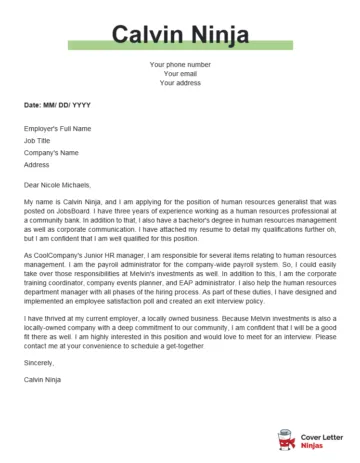
In your closing statement, express your genuine enthusiasm for the position and the company. Show the hiring manager that you are not only qualified but also excited about the opportunity. Instead of simply stating that you are interested, explain what specifically attracts you to the role and the company. Mentioning something specific about the company’s mission, values, or recent initiatives demonstrates that you have done your research and are truly interested in contributing to their success. Use positive and energetic language to convey your passion for the field of human resources and your eagerness to make a difference within the organization. Show the reader your excitement about the opportunity to move forward to the next step.
Call to Action
Conclude your human resources cover letter with a clear and confident call to action. Encourage the hiring manager to take the next step by expressing your eagerness for an interview. This reinforces your interest and makes it easier for them to move forward with the hiring process. Reiterate your contact information, making it easy for them to reach you. You can say, “Thank you for your time and consideration. I am eager to discuss how my skills and experience can contribute to [Company Name]’s success. I welcome the opportunity for an interview and can be reached at [phone number] or [email address].” This call to action demonstrates initiative and makes it simple for the hiring manager to contact you. A compelling call to action can be the final piece of your cover letter that secures your interview.